QuantiFERON-TB Gold / Interferon Gamma Release Assay (IGRA) Test: Booking, Price, and Results
About QuantiFERON-TB Gold / Interferon Gamma Release Assay (IGRA) Test: Booking, Price, and Results
| Field | Value |
|---|---|
| Also Known As | QFT-Gold Test, TB Gold Test, IGRA Test, QuantiFERON Test |
| Sample Type | Venous blood |
| Fasting Required | Not required |
| Report Time | 3 to 5 days |
| Recommended For | All genders and age groups; preferred for individuals vaccinated with BCG |
| Price | Starting at ₹2600 |
What Is a QuantiFERON-TB Gold / Interferon Gamma Release Assay (IGRA) Test?
The QuantiFERON-TB Gold / interferon gamma release assay (IGRA) test is a blood test that detects whether a person has been infected with the bacteria that cause tuberculosis (TB). It measures a specific immune response in the blood rather than relying on a skin reaction. Doctors commonly order it when TB infection is suspected or needs to be ruled out before starting certain medications. The test is also known as the QFT-Gold test, the TB Gold test, the IGRA test or the QuantiFERON test.
What Does a QuantiFERON-TB Gold / Interferon Gamma Release Assay (IGRA) Test Measure?
This QuantiFERON-TB Gold / interferon gamma release assay (IGRA) test works by exposing your blood to TB-specific proteins and measuring how your immune cells respond. The test analyses the following component:
| Component | What It Assesses |
|---|---|
| Interferon-gamma (IFN-γ) | A protein released by immune cells when they recognise TB bacteria |
Why Is a QuantiFERON-TB Gold / Interferon Gamma Release Assay (IGRA) Test Done?
A doctor may request this IGRA test for a number of reasons, from investigating symptoms to screening people at higher risk of TB exposure.
Common Symptoms That May Require This Test
Several symptoms may prompt a doctor to order a QuantiFERON test. Here are the most common ones:
- Persistent cough lasting more than three weeks
- Coughing up blood or sputum
- Chest pain
- Unexplained fatigue or weakness
- Unintentional weight loss
- Loss of appetite
- Fever and night sweats
Conditions This Test Can Help Detect
The QFT-Gold test helps identify the following conditions:
- Latent TB infection (LTBI), where TB bacteria are present in the body but inactive and causing no symptoms
- Active tuberculosis disease (note: this test cannot tell the difference between latent and active TB on its own)
- Immune response linked to exposure to Mycobacterium tuberculosis, the bacterium that causes TB
How to Prepare and What to Expect
Preparation for this test is straightforward, but a few points are worth keeping in mind before your appointment.
Do You Need to Fast?
No, fasting is not required. You can eat and drink normally before the test. However, do inform your doctor about any medicines you are taking, especially those that affect the immune system, as these may influence how results are interpreted. Always follow specific instructions provided by your doctor or laboratory.
Practical Tips Before Your Test
Here are a few things to do before your sample is collected:
- If you have recently had a live-virus vaccine (such as measles, mumps, rubella, or yellow fever), speak to your doctor. Testing should happen on the same day as vaccination or at least one month after.
- Tell your doctor about any immunosuppressive medicines you are taking or any recent illnesses, as these can affect how results are interpreted.
- Drink enough water before your appointment to make the blood draw easier.
- Wear loose, short-sleeved clothing for easy access to your arm.
Step-by-Step Procedure
Here is what typically happens during the blood collection for this test:
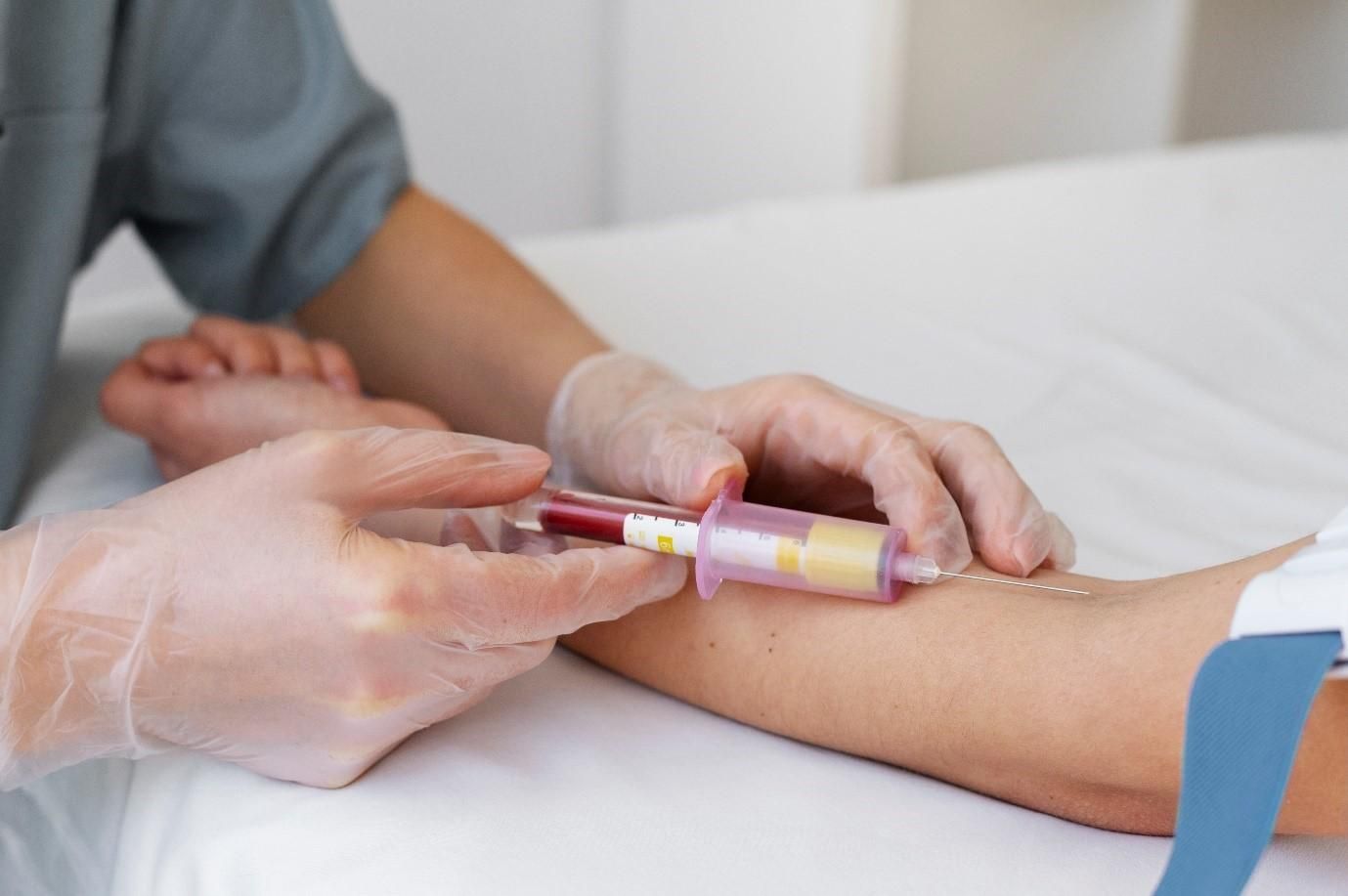
- The phlebotomist cleans the skin on the inside of your arm with an antiseptic wipe.
- A soft elastic band is tied around your upper arm to make the vein easier to locate.
- A small needle is inserted into a vein in your arm to collect the blood sample required for the test.
- The blood is collected into specialised tubes used for interferon gamma testing.
- The elastic band is removed, and gentle pressure is applied to the puncture site.
- A small bandage is placed over the site, and the samples are sent to the laboratory for analysis to assess the immune response to tuberculosis (TB) bacteria.
Factors That Can Affect Accuracy
Several factors may affect the reliability of your QuantiFERON-TB Gold / interferon gamma release assay (IGRA) test results:
- Incorrect blood volume in the collection tubes
- Delay in transporting the sample to the laboratory
- Damaged, discoloured, or fatty blood samples
- Immunosuppressive medications or conditions affecting immune function
- Errors in laboratory handling or result interpretation
- A weakened immune system due to illness, medication, or conditions such as HIV
Understanding Your QuantiFERON-TB Gold / Interferon Gamma Release Assay (IGRA) Test Results
A doctor should always review them alongside your symptoms, risk factors, and medical history. Your results will be reported as:
| Interferon-gamma (IFN-γ) Result | Remarks |
|---|---|
| Negative | No significant IFN-γ response detected against TB antigens. |
| Positive | Significant IFN-γ response detected, suggestive of TB infection. |
| Indeterminate | The test result is inconclusive and may require repeat testing. |
These ranges are general guidelines. Your doctor will interpret your results based on your age, health history, and other factors. Always consult a qualified healthcare professional for personalised medical advice.
Results During Special Conditions
Certain health conditions can affect how the QuantiFERON-TB Gold / interferon gamma release assay (IGRA) test performs. The following are explicitly documented:
People with conditions that weaken the immune system, such as HIV infection or diabetes, or those on long-term steroid treatment may receive false-negative results because their immune cells may not respond adequately to the TB antigens.
Older adults and individuals with low lymphocyte (white blood cell) counts are also at higher risk of false-negative results.
Factors such as low body weight, smoking, and certain genetic traits may also reduce the strength of the immune response, potentially affecting the outcome.
How to Maintain Healthy Levels
Because this test detects infection rather than a measurable level like cholesterol, general immune health is the key focus here:
- Maintain good nutrition and a balanced diet to support immune function.
- If you have been exposed to someone with TB, get tested promptly. Early detection allows for timely medical review.
- Follow your doctor's guidance carefully if a latent infection is identified, as early intervention can significantly reduce the risk of the infection becoming active.
Lupin Diagnostics QuantiFERON-TB Gold / Interferon Gamma Release Assay (IGRA) Test Price and Home Collection
The QuantiFERON-TB Gold / interferon gamma release assay (IGRA) test price starts at ₹2600 and is available at Lupin Diagnostics with home sample collection across multiple cities. The table shows approximate prices:
| City | Approximate Price (₹) |
|---|---|
| Mumbai | ₹2600 |
| Bengaluru | ₹2600 |
| Chennai | ₹2600 |
| Hyderabad | ₹2600 |
| Kolkata | ₹2700 |
| Pune | ₹2600 |
Prices are indicative and may vary by location. Please confirm the current price at the time of booking.
How to Book
- Select the test on the Lupin Diagnostics website.
- Choose your city and preferred time slot.
- Opt for home sample collection by a certified phlebotomist, or visit your nearest Lupin Diagnostics centre.
- Receive your report via email or WhatsApp within the stipulated turnaround time.
Home Collection
Lupin Diagnostics offers home sample collection for the QuantiFERON-TB Gold / interferon gamma release assay (IGRA) test across cities in India. All samples are processed in NABL-accredited laboratories by trained technologists. Your digital report is delivered directly to your email or WhatsApp once ready.
Frequently Asked Questions
The QuantiFERON test does not cross-react with the BCG vaccine or most non-TB mycobacteria, making it more accurate for people who have been vaccinated with BCG. It also requires only one visit, whereas the tuberculin skin test (Mantoux or TST) requires a second visit 48 to 72 hours later to read the result.
No, the IGRA test cannot distinguish between active and latent TB on its own. A positive result confirms TB infection, but further tests such as a chest X-ray and sputum analysis are needed to determine whether the infection is active.
No. The TB Gold test is not affected by the BCG vaccine, which is a key advantage over the traditional skin test. A positive result on this test reflects genuine TB infection, not prior vaccination.
An indeterminate result means the test could not produce a clear positive or negative outcome. This may happen if the immune cells in the sample did not respond as expected due to a weakened immune system, technical issues, or improper sample handling. Your doctor may recommend repeating the test.
This is a standard blood draw. You may experience minor discomfort, slight bruising, or brief bleeding at the puncture site. There are no significant side effects associated with this test.
The QuantiFERON-TB Gold / interferon gamma release assay (IGRA) test is recommended for people at higher risk of TB infection. This includes healthcare workers, people who have been in close contact with someone diagnosed with active TB, individuals who have lived in or travelled to areas where TB is common, residents of high-density settings such as shelters or care homes, and those with conditions that weaken the immune system such as HIV or diabetes.
QuantiFERON-TB Gold / Interferon Gamma Release Assay (IGRA) Test: Booking, Price, and Results