Immunoglobulin IgE Total (Total IgE) Test: Booking, Price, and Results
About Immunoglobulin IgE Total (Total IgE) Test
| Field | Value |
|---|---|
| Also Known As | Quantitative IgE, Immunoglobulin E, Serum IgE, IgE Allergy Test, Specific IgE, RAST (Radioallergosorbent Test) |
| Sample Type | Venous blood (serum) |
| Fasting Required | No fasting required |
| Report Time | Same day to 24 hours |
| Recommended For | All ages, both genders |
| Price | Starting at ₹252 |
What Is an Immunoglobulin IgE Total (Total IgE) Test?
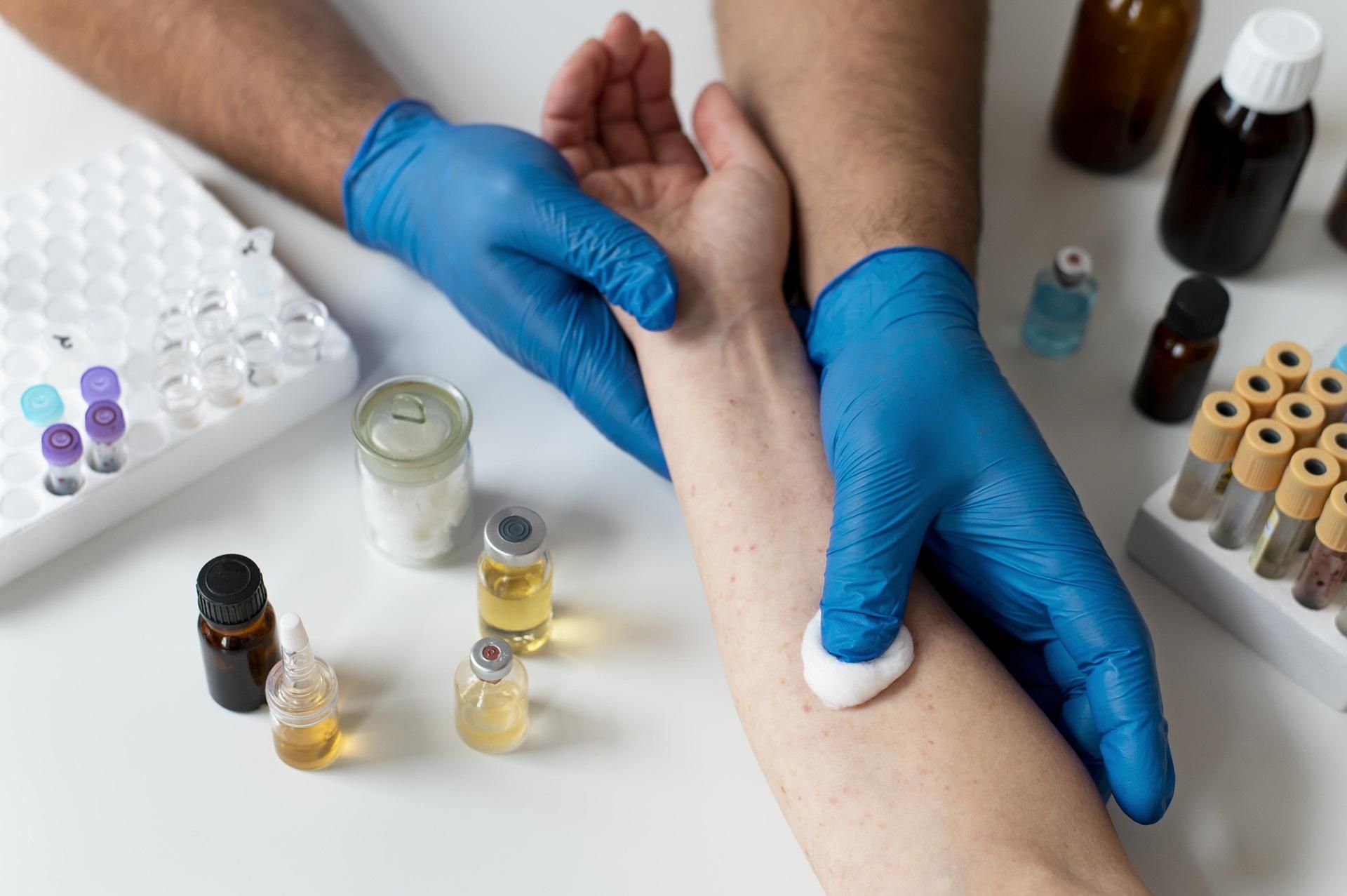
The Total IgE test measures the overall level of immunoglobulin E antibodies in your blood. IgE is a type of antibody produced by the immune system, and it plays a central role in allergic reactions and defence against certain parasitic infections. A doctor may prescribe this serum IgE test when a patient shows signs of allergies, recurring skin reactions, or breathing problems. A small blood sample drawn from a vein in the arm is all that is needed.
What Does an Immunoglobulin IgE Total (Total IgE) Test Measure?
This immunoglobulin E test measures the total concentration of IgE antibodies circulating in the bloodstream. IgE is normally present in very small amounts — it accounts for less than 0.001% of all immunoglobulins in healthy individuals. Most IgE molecules attach to immune cells called mast cells and basophils. When an allergen enters the body, it binds to IgE on these cells, triggering the release of histamine and other substances that cause allergic symptoms.
The test reports a single value: total IgE in international units per millilitre (IU/mL). Because IgE levels vary naturally with age, results are assessed using age-specific reference ranges.
Why Is an Immunoglobulin IgE Total (Total IgE) Test Done?
A doctor may order this IgE allergy test for several reasons, from investigating unexplained symptoms to tracking a known allergic condition.
Common Symptoms That May Require This Test
The following symptoms often prompt a doctor to request this test:
- Itchy or watery eyes
- Frequent sneezing and a runny nose
- Skin rashes or hives
- Wheezing or coughing without an obvious cause
- Shortness of breath
- Chronic eczema (persistent dry, itchy, inflamed skin)
- Recurring skin wheals or swelling
Conditions This Test Can Help Detect
A quantitative IgE test can help identify a range of conditions. These include:
- Allergic rhinitis (commonly called hay fever)
- Allergic asthma and allergic bronchopulmonary aspergillosis (a lung condition caused by fungal allergy)
- Food allergies
- Atopic eczema
- Chronic spontaneous urticaria (recurring itchy skin wheals with no clear trigger)
- Parasitic worm infections (helminthiasis)
- Hyper-IgE syndrome (a rare immune condition with very high IgE levels)
Immunoglobulin IgE Total (Total IgE) Test for Chronic Disease Monitoring
This test is an important marker of disease activity in allergic bronchopulmonary aspergillosis (ABPA). A decline of 35% or more in total IgE over 6 weeks is used as a sign of remission. Doctors also monitor total IgE levels in patients receiving anti-IgE therapy, such as omalizumab, for allergic asthma or chronic urticaria. Candidates for this therapy must have total IgE levels within a specific range, making this test essential for both eligibility assessment and ongoing dose management.
How to Prepare and What to Expect
No special preparation is needed for this test, making it straightforward to fit into your daily routine.
Do You Need to Fast?
No, fasting is not required before a total IgE test. You can eat and drink as normal before your appointment. If your doctor has ordered additional tests alongside this one, check separately whether any of those require fasting.
Practical Tips Before Your Test
A few simple steps will help ensure a smooth experience:
- Tell your doctor about all medications you are taking, especially antihistamines and corticosteroids, as these may affect your results
- If you take high-dose biotin supplements (above 5 mg), avoid them for at least 12 hours before the sample is collected
- Wear a short-sleeved or loose-fitting top so the healthcare professional can access your arm easily
- Drink water before your appointment to stay hydrated, as this makes the veins easier to locate
Step-by-Step Procedure
Here is what happens during sample collection for this allergy blood test:
- A trained phlebotomist cleans the skin on the inside of your elbow with an antiseptic wipe.
- An elastic band is tied around your upper arm to make the veins more visible.
- A sterile needle is gently inserted into a vein, and a small blood sample is drawn into a collection tube.
- Once enough blood is collected, the needle is removed, and gentle pressure is applied to the puncture site.
- A small bandage or cotton swab is placed over the area.
- The sample is labelled and sent to the laboratory for analysis. The entire process usually takes no more than five minutes.
Factors That Can Affect Accuracy
Certain factors may influence your results. These include:
- Taking antihistamines or corticosteroids before the test
- High-dose biotin supplementation within 12 hours of the test
- Active parasitic infections, which can raise IgE levels independently of allergy
- Recent allergen exposure
- Cigarette smoking, which is known to elevate IgE levels
Understanding Your Immunoglobulin IgE Total (Total IgE) Test Results
Results should always be reviewed alongside your symptoms, medical history, and other tests. Your doctor is best placed to explain what your specific values mean for you.
| Age Group | Normal Range (IU/mL) |
|---|---|
| Neonates (under 1 year) | 0 to 1.5 |
| Children (1 to 5 years) | 0 to 60 |
| Children (6 to 9 years) | 0 to 90 |
| Adolescents (10 to 15 years) | 0 to 200 |
| Adults (non-allergic) | 0 to 100 |
These ranges are general guidelines. Your doctor will interpret your results based on your age, health history, and other factors. Always consult a qualified healthcare professional for personalised medical advice.
A result within the normal range suggests that an allergic cause for your symptoms is less likely, though it does not rule out allergies entirely. Raised levels may point to allergic disease, parasitic infection, certain immune conditions, or other causes. Very low IgE levels can occasionally be associated with immune deficiencies.
Results During Special Conditions
- People living in tropical regions with widespread parasitic worm infections often have very high total IgE levels even without any allergic disease, which limits the usefulness of the test as a standalone allergy marker in those settings.
- IgE levels also change naturally across a person's life, peaking during adolescence and gradually declining in adulthood.
- Smoking is another variable that can push IgE levels above the normal range. Your doctor will always consider these factors alongside your result.
How to Maintain Healthy Levels
These general wellness steps support good immune health:
- Identify known allergens and reduce your exposure to them where possible
- Keep indoor spaces well-ventilated and free from dust, mould, and pet dander
- Avoid smoking and exposure to second-hand tobacco smoke
Lupin Diagnostics Immunoglobulin IgE Total (Total IgE) Test Price and Home Collection
The total IgE test starts at approximately ₹252 and is available with convenient home sample collection across major cities. The table below shows approximate city-wise prices.
| City | Approximate Price (₹) |
|---|---|
| Mumbai | ₹1000 |
| Chennai | ₹850 |
| Bangalore | ₹850 |
| Hyderabad | ₹850 |
| Kolkata | ₹850 |
| Pune | ₹900 |
| Ahmedabad | ₹900 |
Prices are indicative and may vary by location. Please confirm the current price at the time of booking.
How to Book
- Select the test on the Lupin Diagnostics website.
- Choose your city and preferred time slot.
- Opt for home sample collection by a certified phlebotomist, or visit your nearest Lupin Diagnostics centre.
- Receive your report via email or WhatsApp within the stipulated turnaround time.
Home Collection
Lupin Diagnostics offers home sample collection for this serum IgE test across cities in India. All samples are processed in NABL-accredited laboratories staffed by experienced doctors and technologists. Digital reports are delivered promptly via email or WhatsApp, so you can share them with your doctor without delay.
Frequently Asked Questions
The Total IgE test measures all IgE antibodies in your blood as a single figure, giving an overall picture of your immune response. A specific IgE test, by contrast, measures the IgE your body produces in response to one particular allergen, such as dust mites or peanuts. Doctors often use both tests together to first assess overall allergic tendency and then pinpoint the exact cause.
Yes, this is possible. Some people with genuine allergic conditions have total IgE levels within the normal range, particularly when they are sensitive to only a small number of allergens. A normal result does not rule out an allergy, and your doctor may recommend further specific allergen testing if your symptoms continue.
Several conditions other than allergies can raise IgE levels, including parasitic infections, certain rare immune disorders, and some other medical conditions. Smoking can also elevate results. Your doctor will look at your full clinical picture, including symptoms, travel history, and other test findings, before drawing any conclusion.
No fasting is needed before this allergy blood test. You can eat and drink as usual before your appointment. Simply let the healthcare professional know if you have taken any medications or supplements that morning.
Tell your doctor about all medicines you are currently taking. Antihistamines and corticosteroids in particular can influence IgE results. High-dose biotin supplements (above 5 mg) should also be mentioned and ideally avoided for at least 12 hours before the test.
For patients with allergic asthma, the quantitative IgE test helps determine whether anti-IgE treatment (omalizumab) is appropriate and what the correct dose should be. Patients must have total IgE levels within a defined range to be considered for this therapy, so the test plays a direct role in treatment planning.
Yes, children of all ages, including infants, can have this test. IgE levels are naturally low at birth and rise gradually through childhood, reaching their peak during adolescence. Age-specific reference ranges are used when interpreting results in younger patients, so the values that are normal for a child differ from those in an adult.
Immunoglobulin IgE Total (Total IgE) Test: Booking, Price, and Results