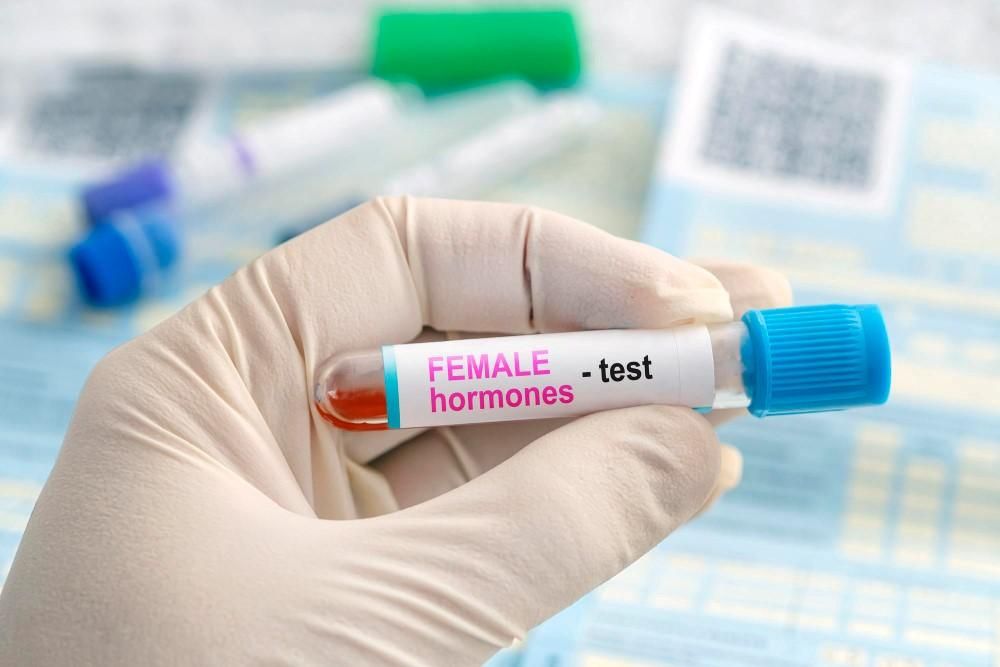
Anti-Mullerian Hormone Gold Plus Test
About Anti-Mullerian Hormone Gold Plus Test
| Field | Value |
|---|---|
| Also Known As | AMH Gold Plus, Anti-Müllerian Hormone Test, Müllerian-Inhibiting Hormone (MIH), Müllerian-Inhibiting Substance (MIS), Ovarian Reserve Test |
| Sample Type | Venous blood (serum) |
| Fasting Required | While not strictly required, 12 hours of fasting is generally recommended |
| Report Time | 2 to 5 days |
| Recommended For | Women of reproductive age (typically 18 to 45 years) evaluating fertility |
| Price | Starting at ₹550 |
What Is an Anti-Mullerian Hormone Gold Plus Test?
The Anti-Mullerian Hormone (AMH) Gold Plus test is a blood panel that measures several reproductive and hormonal markers, with AMH at its core. It is prescribed primarily to women who want to understand their fertility potential, also known as their ovarian reserve. A venous blood sample is collected from the arm and sent for laboratory analysis. The test is also referred to as the AMH Gold Plus or the ovarian reserve test.
What Does an Anti-Mullerian Hormone Gold Plus Test Measure?
This panel assesses seven hormones that together give a fuller picture of reproductive health. The table below outlines each parameter and its role.
| Parameter | What It Indicates |
|---|---|
| Anti-Müllerian Hormone (AMH) | Reflects the number of eggs remaining in the ovaries (ovarian reserve) |
| Follicle-Stimulating Hormone (FSH) | Shows how well the pituitary gland is stimulating egg maturation |
| Luteinising Hormone (LH) | Indicates whether ovulation (egg release) is occurring normally |
| Prolactin | Affects menstrual cycles; elevated levels can disrupt fertility |
| Thyroid-Stimulating Hormone (TSH) | Monitors thyroid function, which has a direct impact on fertility |
| Progesterone | Shows whether the uterus is being prepared appropriately for pregnancy |
| Testosterone | Elevated levels in women may point to conditions such as PCOS |
Why Is an Anti-Mullerian Hormone Gold Plus Test Done?
This test is ordered when a doctor wants to evaluate a woman's fertility status or investigate hormonal imbalances that may be affecting her reproductive health.
Common Symptoms That May Require This Test
- Difficulty conceiving despite regular unprotected intercourse
- Irregular or absent menstrual periods
- Hot flushes or night sweats in women under 40
- Excess facial or body hair growth
- Persistent acne or unexplained weight gain
- Signs of early menopause
- Acne combined with hormonal irregularities
Conditions This Test Can Help Detect
- Low ovarian reserve (reduced number and quality of eggs)
- Polycystic ovary syndrome (PCOS), where AMH levels are often elevated
- Premature ovarian failure, characterised by very low or negligible AMH
- Ovarian granulosa cell tumours, for which AMH is a recognised marker
- Thyroid disorders affecting fertility (detected via TSH)
- Elevated prolactin levels disrupt ovulation
How to Prepare and What to Expect
Knowing what to do before the test and what happens during sample collection can help you feel at ease on the day.
Do You Need to Fast?
While not absolutely necessary, 12 hours of fasting is recommended before this test. This applies because the panel includes multiple hormones, some of which can be influenced by food intake. If you have been asked to get only a standalone AMH hormone test, fasting is generally not required; however, follow your doctor's specific instructions.
Practical Tips Before Your Test
- Inform your doctor about all medications, including multivitamins and supplements
- Tell your doctor if you are using hormonal contraceptives, as these can lower AMH levels
- Disclose any recent ovarian surgery or chemotherapy, as these affect results
- Drink plenty of water before the test (water does not break the fast and helps with blood collection)
- Wear a loose-sleeved top for easy access to the arm
Step-by-Step Procedure
- A trained phlebotomist cleans the skin on your inner arm with an antiseptic swab.
- An elastic band is tied around the upper arm to make the vein more visible.
- A small needle is gently inserted into the vein, and a blood sample is drawn into a collection tube.
- The needle is removed, and a cotton swab is pressed over the site to stop any bleeding.
- The sample tube is labelled with your details.
- The sample is sent to the laboratory, where hormone analysis begins.
Factors That Can Affect Accuracy
- Use of hormonal contraceptives (can lower AMH by 20 to 30%)
- Recent ovarian surgery or chemotherapy, which can reduce AMH levels
- Vitamin D deficiency, which may affect hormone levels
- The laboratory method used, as different assays can produce slightly varying readings
- Dehydration or high stress levels around the time of the test
Understanding Your Anti-Mullerian Hormone Gold Plus Test Results
Results from this panel provide a snapshot of your hormonal and reproductive health. Always review them with your doctor, who will place the numbers in the context of your age, medical history, and symptoms. The table below shows general reference ranges.
| Parameter | Normal Range | Unit |
|---|---|---|
| AMH (Adult Female, optimal) | 1.0 to 4.0 | ng/mL |
| AMH (Age 25 to 30) | 2.0 to 4.0 | ng/mL |
| AMH (Age 35 to 40) | 1.0 to 2.5 | ng/mL |
| AMH (Above 40 years) | Below 1.0 is common | ng/mL |
| FSH (Day 2 to 3 of cycle) | 1.5 to 12.4 | IU/L |
| LH (Day 2 to 3 of cycle) | 1.68 to 15.0 | IU/L |
| Prolactin | <25.0 | ng/mL |
| TSH | 0.4 to 4.0 | mIU/L |
| Progesterone (follicular phase) | <1.5 | ng/mL |
| Testosterone (Female) | 15 to 70 | ng/dL |
These ranges are general guidelines. Your doctor will interpret your results based on your age, health history, and other factors. Always consult a qualified healthcare professional for personalised medical advice.
Results During Special Conditions
Certain situations can alter how your results should be read: AMH levels can fall by 20 to 30% in women using hormonal contraceptives. Levels generally return to baseline within 3 to 4 months of stopping. Women with PCOS typically show considerably elevated AMH because of the higher number of ovarian follicles present. Recent chemotherapy or radiation can damage ovarian tissue and produce lower-than-expected AMH readings.
How to Maintain Healthy Levels
While AMH levels are largely determined by age and genetics, certain habits can support overall ovarian health:
- Eat a nutrient-rich diet with adequate vitamins and minerals, particularly vitamin D
- Exercise regularly and manage stress, as chronic stress can disrupt hormonal balance
- Avoid smoking and limit alcohol intake, as both can affect ovarian reserve over time
Lupin Diagnostics Anti-Mullerian Hormone Gold Plus Test Price and Home Collection
The Anti-Mullerian Hormone Gold Plus test price varies by city. The table below provides indicative prices based on aggregator data for the egg count test panel across major Indian cities.
| City | Approximate Price (₹) |
|---|---|
| Mumbai | ₹1,850 |
| Bengaluru | ₹1,600 |
| Chennai | ₹1,850 |
| Hyderabad | ₹1,850 |
| Kolkata | ₹2,050 |
| Pune | ₹1,850 |
| Ahmedabad | ₹1,850 |
Prices are indicative and may vary by location. Please confirm the current price at the time of booking.
How to Book
- Select the test on the Lupin Diagnostics website.
- Choose your city and preferred time slot.
- Opt for home sample collection by a certified phlebotomist, or visit your nearest Lupin Diagnostics centre.
- Receive your report via email or WhatsApp within the stipulated turnaround time.
Home Collection
Lupin Diagnostics offers home sample collection for this test across multiple cities in India, so you can have your blood drawn in the comfort of your home. All samples are processed in NABL-accredited laboratories by experienced technologists. Digital reports are available via email or WhatsApp once ready.
Frequently Asked Questions
The AMH Gold Plus panel assesses a woman's fertility status by measuring seven reproductive hormones, with AMH at the centre. It helps determine ovarian reserve, meaning the number and quality of eggs remaining in the ovaries. Doctors use it when evaluating fertility or investigating hormonal irregularities.
Yes. Unlike many other reproductive hormones, AMH levels remain relatively stable throughout the menstrual cycle. You can take the ovarian reserve test on any day, making it convenient to schedule. Other hormones in the panel, such as FSH and LH, are ideally measured on days 2 to 3 of the cycle; your doctor will advise accordingly.
Not necessarily. A low AMH indicates a lower egg count but does not predict whether or not you can conceive, either naturally or with treatment. Many women with low AMH do become pregnant. Your doctor will consider your full hormonal profile and medical history before advising the next steps.
An elevated AMH reading can point to PCOS, as this condition involves a higher-than-normal number of ovarian follicles. High AMH may also suggest an increased response to IVF stimulation. In rare cases, it may be associated with certain ovarian tumours. A high result alone does not confirm any diagnosis; further evaluation is needed.
While not necessary, 12 hours of fasting is recommended before this panel because it includes multiple hormone tests that can be affected by food intake. If your doctor has ordered only a standalone AMH hormone test, fasting is generally not necessary, but always confirm with your healthcare provider.
Results for the Anti-Mullerian Hormone Gold Plus test are typically available within 2 to 5 days after sample collection. Lupin Diagnostics delivers reports digitally via email or WhatsApp, so you do not need to visit the centre to collect them.
Yes. Birth control pills can reduce AMH levels by approximately 20 to 30%. These levels generally return to their natural baseline within three to four months of stopping contraception. Always inform your doctor if you are using any hormonal contraceptives before taking this test, so your results can be interpreted correctly.
Anti-Mullerian Hormone Gold Plus Test