Book a Home Collection Now!
How To Know The Symptoms Of High Lipoprotein A Warning Signs And Risk Factors
April 29, 2025 - By Lupin Diagnostics
The lipoprotein(a) test, often written as Lp(a) test, has gained major global attention because it identifies one of the most important but least recognized contributors to heart disease. Many people with heart attacks, strokes, or blocked arteries have normal cholesterol levels, normal lifestyle habits, and few traditional risk factors. What they often do have is elevated Lp(a).
High Lp(a) acts as a silent cardiovascular risk factor, gradually increasing inflammation, plaque formation, and the tendency for blood clots. Because high Lp(a) symptoms are indirect and usually appear only after significant vascular damage, the lipoprotein(a) test is an essential part of modern heart-disease risk evaluation.
This comprehensive guide explains what Lp(a) is, high Lp(a) symptoms, who should be tested, genetic vs lifestyle contributors, normal Lp(a) levels, cardiovascular risks, and emerging therapies now being recommended in cardiology.
What Is Lipoprotein(a) and Why the Lipoprotein(a) Test Matters
Lipoprotein(a), commonly called Lp(a), is a cholesterol-carrying particle in your blood that resembles LDL cholesterol (“bad cholesterol”) but includes an additional component, apolipoprotein(a). This apolipoprotein(a) is what makes Lp(a) uniquely dangerous. It can:
- accelerate plaque buildup in the arteries
- trigger inflammation inside blood vessels
- interfere with the breakdown of blood clots
Because of these mechanisms, high Lp(a) is officially recognized as an independent cardiovascular risk factor by major health organizations.
Unlike LDL cholesterol, Lp(a) does not significantly respond to diet, exercise, or most cholesterol-lowering medications. That is why the lipoprotein(a) test is crucial, especially for those with unexplained heart disease or family history of early cardiac events.
What are The Normal Lp(a) Levels
Understanding your Lipoprotein(a) test result begins with knowing the healthy reference ranges. Levels may be reported in mg/dL or nmol/L depending on laboratory methodology.
General Reference Ranges
- Normal Lp(a):
- < 30 mg/dL
- < 75 nmol/L
- Borderline to High Lp(a):
- 30–50 mg/dL
- 75–125 nmol/L
- High Cardiovascular Risk Lp(a):
- > 50 mg/dL
- > 125 nmol/L
The American Heart Association and European Society of Cardiology both recommend at least one lifetime Lp(a) test, especially for those with heart disease risk factors.
High Lp(a) Symptoms- What You Need to Watch For
One of the most important facts about high Lp(a) is this:
There are no direct high Lp(a) symptoms.
Instead, high Lp(a) symptoms show up through the diseases it causes.
Because Lp(a) creates arterial plaque and clotting tendencies, the symptoms you experience are often symptoms of cardiovascular disease, such as:
1. Chest Pain or Angina
High Lp(a) can accelerate coronary artery plaque buildup even in people with normal LDL, leading to chest discomfort, especially during physical activity.
2. Breathlessness
Reduced blood supply to the heart or lungs caused by blocked arteries can produce shortness of breath.
3. Fatigue and Exercise Intolerance
As the heart works harder to pump blood through narrowed arteries, fatigue becomes a major early warning sign.
4. Stroke-Like Symptoms
High Lp(a) increases clot formation. Warning signs may include:
- sudden weakness on one side
- difficulty speaking
- blurred vision
5. Leg Pain or Cramping
Poor leg circulation due to peripheral artery disease (PAD) can result from high Lp(a).
6. Early Heart Attack Without Traditional Risk Factors
Many young or seemingly healthy individuals who experience unexpected heart attacks later test positive for high Lp(a).
These symptoms occur indirectly, meaning they result from vascular damage caused by elevated Lp(a) rather than from lipoprotein(a) itself.
What Are The Cause of High Lipoproteins- Genetic vs Lifestyle
The most important thing to understand is that Lp(a) is almost entirely genetically determined.
Genetic Causes
- The LPA gene determines your Lp(a) level.
- Lp(a) levels are stable throughout life and are present from birth.
- If one parent has high Lp(a), there is a strong chance their children will too.
Family History Associations
You are more likely to have high Lp(a) if your family has a history of:
- early heart attacks (before age 55 in men, 65 in women)
- strokes without traditional risk factors
- unexplained high cholesterol
- sudden cardiac death
Lifestyle Factors
Lifestyle does not significantly lower Lp(a), but certain conditions can worsen its impact:
- chronic inflammation
- uncontrolled diabetes
- smoking
- hypertension
- sedentary lifestyle
Thus, while lifestyle does not cause high Lp(a), it increases the likelihood that its harmful effects will manifest as heart disease.
High Lipoprotein(a) Symptoms in High-Risk Individuals
In individuals with additional risk factors such as high LDL cholesterol, high blood pressure, diabetes, smoking, or obesity, high Lp(a) symptoms appear earlier and may be more severe.
You may experience:
- unstable angina
- early heart attack
- unexplained blood clots
- early signs of stroke
- severe or sudden PAD
For this group, a lipoprotein(a) test becomes an essential part of cardiovascular risk evaluation.
Diagnosing High Lipoprotein(a)- The Lipoprotein(a) Test
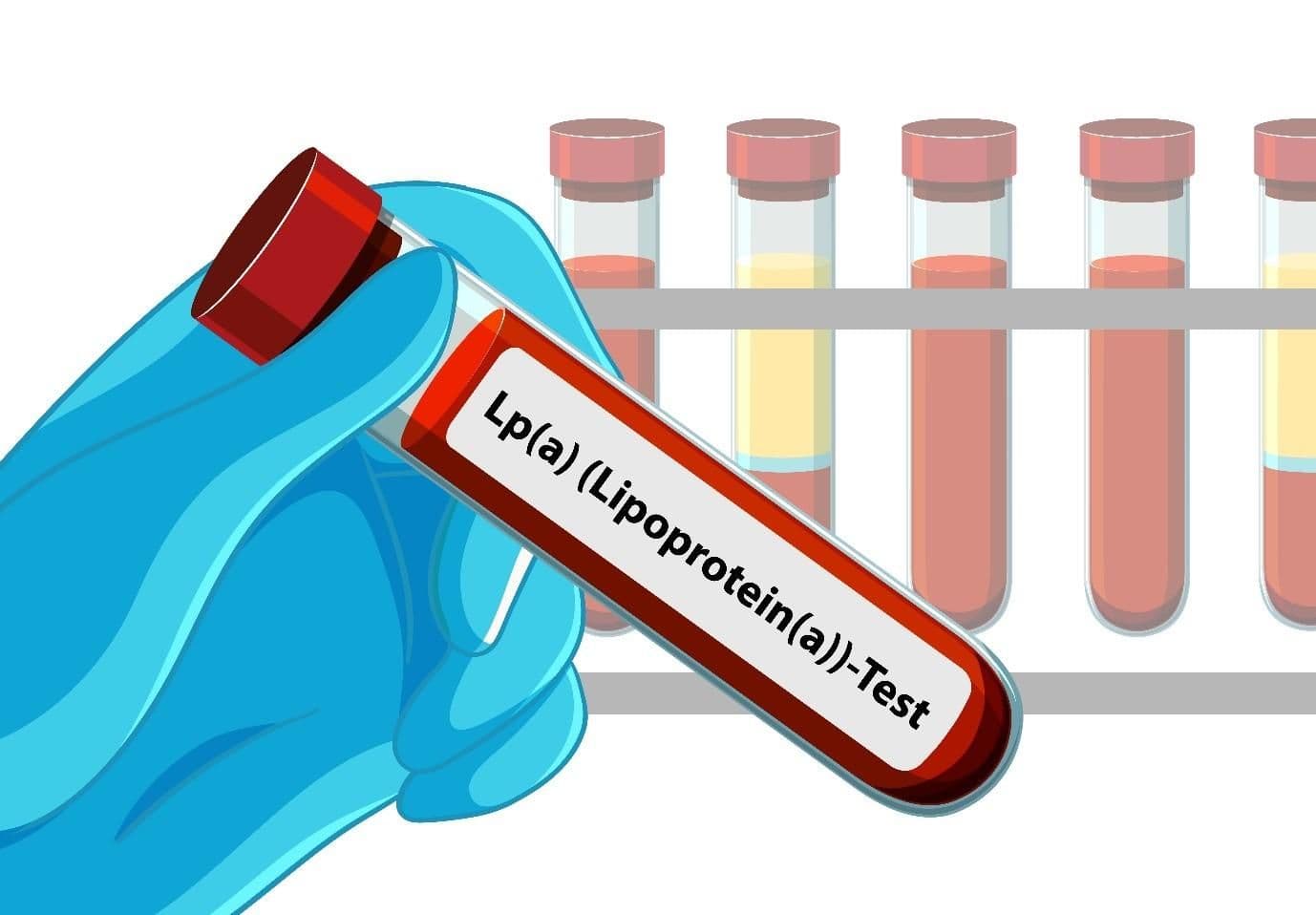
A lipoprotein(a) test is a simple blood test, but unlike routine cholesterol tests, it must be specifically requested.
Doctors may recommend the Lp(a) test if:
- you have a family history of premature heart disease
- your LDL cholesterol is high with no clear cause
- you have had a heart attack despite normal cholesterol levels
- you have familial hypercholesterolemia
- you have early stroke or recurrent clotting disorders
The test is performed once in a lifetime unless your doctor requires monitoring during treatment.
What the Lipoprotein(a) Test Reveals
The test gives a numerical value that directly corresponds to cardiovascular risk. Higher numbers mean greater risk of:
- coronary artery disease (CAD)
- atherosclerosis
- stroke
- peripheral artery disease
- blood clots
- aortic valve stenosis (Lp(a) promotes calcification)
This is why the lipoprotein(a) test is now being integrated into preventive health guidelines globally.
Cardiovascular Risk Factor- Why High Lp(a) Is So Dangerous
Lp(a) contributes to cardiovascular disease through multiple biologic pathways:
1. Accelerates Atherosclerosis
High Lp(a) binds to arterial walls and encourages plaque formation more aggressively than LDL cholesterol.
2. Causes Chronic Inflammation
Apolipoprotein(a) promotes inflammation inside artery walls, increasing the chance of plaque instability.
3. Promotes Blood Clot Formation
Lp(a)'s structure interferes with fibrinolysis, the natural process that breaks down blood clots—raising the risk of heart attack and stroke.
4. Leads to Aortic Valve Narrowing
Studies show Lp(a) promotes calcification in the aortic valve, increasing the risk of aortic stenosis.
Because of these mechanisms, Lp(a) is one of the most potent yet overlooked cardiovascular risk factors.
How to Manage High Lipoprotein(a)
Since traditional lifestyle changes do not lower Lp(a), management focuses on reducing the overall cardiovascular burden.
LDL Cholesterol Reduction
Because Lp(a) and LDL cholesterol both increase plaque formation, keeping LDL extremely low (often <55 mg/dL in high-risk individuals) is recommended.
Medication Options
Traditional cholesterol medications like statins do not lower Lp(a), but:
- PCSK9 inhibitors (alirocumab, evolocumab)
- lower LDL by 60%
- reduce Lp(a) by 20–30%
- Niacin
- lowers Lp(a) but is rarely used due to side effects
Lifestyle Adjustments
Lifestyle cannot reduce Lp(a), but it reduces disease risk:
- exercise regularly
- stop smoking
- manage diabetes
- adopt anti-inflammatory diets
- maintain healthy weight
- control blood pressure
Lifestyle helps neutralize the harmful effects of the genetic risk.
Emerging Treatments- A Ray of Hope
Several new therapies are in late-stage development:
1. Antisense Oligonucleotide Therapy
Reduces Lp(a) production at the genetic-transcription level. Early trials show up to 80% reduction in Lp(a).
2. siRNA Therapy
Uses RNA interference to block Lp(a) synthesis. Phase 2 trials show dramatic lowering of Lp(a) levels.
3. Gene Therapy Approaches
Future therapies may silence or correct the LPA gene itself.
These emerging therapies offer realistic hope for patients with genetically high Lp(a).
Who Should Get a Lipoprotein(a) Test?
You should consider the lipoprotein(a) test if:
- you have a personal or family history of premature heart disease
- you experience high Lp(a) symptoms indirectly (angina, stroke-like events)
- you have familial hypercholesterolemia
- you have unexplained high LDL cholesterol
- you have had unexplained cardiovascular events
Most cardiology societies now recommend one-time universal testing.
A Silent Genetic Risk You Should Not Ignore
The lipoprotein(a) test is one of the most important diagnostic tools in modern cardiovascular medicine. Since high Lp(a) symptoms are silent and genetic, early testing provides crucial insight into long-term heart health. Elevated Lp(a) levels dramatically increase the risk of heart attack, stroke, blood clots, and valve disease, even when traditional cholesterol levels appear normal.
By understanding normal Lp(a) levels, your genetic risk, and newly emerging treatments, you can take charge of your cardiovascular health early and prevent life-threatening complications.